

What is today’s biblical proverb? It is a short, focused verse from the Book of Proverbs chosen to offer guidance for the day ahead, paired here with its meaning, a related Psalm, and a short prayer.
Christians read Proverbs daily because the book was written specifically to build wisdom, discipline, and understanding, qualities the Bible treats as more valuable than wealth. Proverbs still matter today because human nature has not changed. The same struggles Solomon wrote about, pride, laziness, gossip, poor money habits, broken relationships, are still the struggles people face now. This guide brings you a daily bible proverb, its meaning, how it connects to the Psalms, and a full 31 day proverbs challenge to build the habit.
115+ English WhatsApp Status Quotes for Every Mood (2026)
Quick Summary
Today’s biblical proverb of the day comes from the Book of Proverbs, written largely by King Solomon to pass down practical, God centered wisdom for everyday living. Reading a proverb of the day bible verse each morning helps believers build discipline, gain understanding, and apply biblical wisdom to real decisions, from relationships to work to faith.
Today’s Biblical Proverb of the Day (Featured Snippet)

Proverbs 3:5-6 (KJV)
“Trust in the LORD with all thine heart, and lean not unto thine own understanding. In all thy ways acknowledge him, and he shall direct thy paths.”
Meaning:
This proverb teaches that human reasoning alone is not enough. True direction comes from trusting God fully rather than relying only on personal judgment. It is one of the most quoted verses in the Book of Proverbs because it applies to nearly every life decision, from career choices to relationships.
Today’s Related Psalm:
psalm 37:5, “Commit thy way unto the LORD; trust also in him; and he shall bring it to pass.”
Today’s Short Prayer:
Lord, help me trust You more than my own understanding today. Guide my steps and my decisions. Amen.
Did You Know?
The Book of Proverbs contains 31 chapters, which is why many Christians read one chapter a day and complete the book each month, matching the days in most calendar months.
250+ Quotes on Courage and Fear: Inspirational Sayings to Build Confidence & Overcome Fear (2026 Guide)
What Is the Book of Proverbs
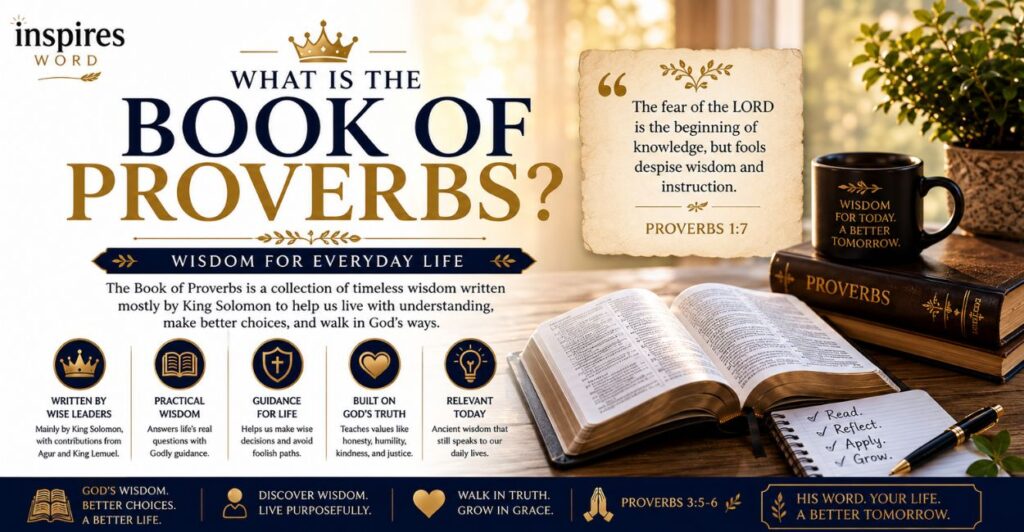
The Book of Proverbs is a collection of short, memorable sayings found in the Old Testament, traditionally attributed mainly to King Solomon, with additional contributions from Agur and King Lemuel. It falls under Wisdom Literature alongside Job, Ecclesiastes, and parts of the Psalms. Unlike historical or prophetic books, Proverbs focuses on practical daily wisdom: how to speak, work, save, raise children, and treat others with integrity.
Bible Insight
Proverbs 1:7 sets the tone for the entire book: “The fear of the LORD is the beginning of knowledge, but fools despise wisdom and instruction.” Every proverb that follows builds on this foundation, that true wisdom begins with reverence for God.
Biblical Proverb of the Day: Daily Wisdom, Meaning and Prayer (2026 Guide)
Today’s biblical proverb of the day comes from the Book of Proverbs and related scripture, offering practical, God centered wisdom for daily life. Below are 30 categories covering more than 210 biblical proverbs, each with its meaning and when to use it, from daily devotion and morning verses to wisdom, faith, parenting, students, and difficult times. Tap Copy next to any proverb to copy that verse, meaning, and when to use it instantly.
Today’s Biblical Proverb of the Day (Featured Snippet)
Proverbs 3:5-6 — “Trust in the LORD with all thine heart, and lean not unto thine own understanding.”
Meaning: Teaches full trust in God over personal reasoning.
When to Use: Use when facing a decision you cannot fully reason out on your own.
Proverbs 16:3 — “Commit thy works unto the LORD, and thy thoughts shall be established.”
Meaning: Handing plans over to God brings stability.
When to Use: Use when starting a new project or plan.
Proverbs 4:23 — “Keep thy heart with all diligence; for out of it are the issues of life.”
Meaning: Guarding the heart protects your whole life direction.
When to Use: Use when tempted by negative influences or thoughts.
Proverbs 19:21 — “There are many devices in a man’s heart; nevertheless the counsel of the LORD, that shall stand.”
Meaning: God’s plan prevails over human intentions.
When to Use: Use when plans do not go as expected.
Proverbs 27:1 — “Boast not thyself of tomorrow; for thou knowest not what a day may bring forth.”
Meaning: Life is uncertain, so humility about the future matters.
When to Use: Use when making confident predictions about the future.
Proverbs 18:10 — “The name of the LORD is a strong tower: the righteous runneth into it, and is safe.”
Meaning: God is a place of refuge and safety.
When to Use: Use when feeling unsafe or overwhelmed.
Proverbs 15:16 — “Better is little with the fear of the LORD than great treasure and trouble therewith.”
Meaning: Contentment with God outweighs wealth with stress.
When to Use: Use when comparing simplicity to a stressful pursuit of more.
Today’s Bible Proverb with Meaning
Proverbs 1:7 — “The fear of the LORD is the beginning of knowledge.”
Meaning: Reverence for God is the starting point of true understanding.
When to Use: Use when introducing someone to biblical wisdom.
Proverbs 9:10 — “The fear of the LORD is the beginning of wisdom.”
Meaning: Wisdom starts with honoring God, not just facts.
When to Use: Use when distinguishing wisdom from mere knowledge.
Proverbs 2:6 — “The LORD giveth wisdom: out of his mouth cometh knowledge and understanding.”
Meaning: Wisdom is a gift from God, not self-made.
When to Use: Use when praying for guidance before a big choice.
Proverbs 3:13 — “Happy is the man that findeth wisdom, and the man that getteth understanding.”
Meaning: True happiness is tied to gaining wisdom.
When to Use: Use when encouraging someone pursuing spiritual growth.
Proverbs 8:11 — “Wisdom is better than rubies.”
Meaning: Wisdom outweighs material wealth in value.
When to Use: Use when weighing wisdom against a tempting shortcut.
Proverbs 13:20 — “He that walketh with wise men shall be wise.”
Meaning: Your circle shapes your character.
When to Use: Use when choosing friendships or mentors.
Proverbs 24:3-4 — “Through wisdom is an house builded.”
Meaning: Wisdom is foundational to building something lasting.
When to Use: Use when starting a family, business, or long term goal.
Bible Proverb of the Day Explained Verse by Verse
Proverbs 3:5 — “Trust in the LORD with all thine heart.”
Meaning: Wholehearted trust, not partial or occasional trust.
When to Use: Use when you catch yourself trusting God only partly.
Proverbs 3:5b — “Lean not unto thine own understanding.”
Meaning: A caution against relying only on personal logic.
When to Use: Use when overthinking a decision.
Proverbs 3:6 — “In all thy ways acknowledge him.”
Meaning: Involve God in every area, not just major decisions.
When to Use: Use when tempted to leave God out of small choices.
Proverbs 3:6b — “He shall direct thy paths.”
Meaning: The promised result of acknowledging God is clear direction.
When to Use: Use when feeling directionless.
Proverbs 16:9 — “A man’s heart deviseth his way: but the LORD directeth his steps.”
Meaning: Human planning is real, but God’s guidance overrides it.
When to Use: Use when a plan changes unexpectedly.
Proverbs 21:30 — “There is no wisdom against the LORD.”
Meaning: No human strategy defeats God’s purposes.
When to Use: Use when facing opposition to a godly goal.
Proverbs 19:20 — “Hear counsel, and receive instruction, that thou mayest be wise.”
Meaning: Wisdom grows through listening, not just speaking.
When to Use: Use when receiving correction or advice.
Historical Background of the Book of Proverbs
Proverbs 1:1 — “The proverbs of Solomon the son of David, king of Israel.”
Meaning: Establishes Solomon as the primary author and royal context.
When to Use: Use when explaining the book’s origin.
Proverbs 25:1 — “These are also proverbs of Solomon, which the men of Hezekiah king of Judah copied out.”
Meaning: Shows the proverbs were compiled over generations.
When to Use: Use when discussing how the book was assembled.
Proverbs 30:1 — “The words of Agur the son of Jakeh.”
Meaning: Introduces a second author beyond Solomon.
When to Use: Use when noting the book has multiple contributors.
Proverbs 31:1 — “The words of king Lemuel, the prophecy that his mother taught him.”
Meaning: Introduces a third voice, taught by a mother’s wisdom.
When to Use: Use when highlighting maternal influence in scripture.
1 Kings 4:32 — “Solomon spake three thousand proverbs.”
Meaning: Confirms Solomon’s vast output of wisdom sayings.
When to Use: Use when explaining the scale of Solomon’s wisdom.
1 Kings 3:12 — “I have given thee a wise and an understanding heart.”
Meaning: God’s direct gift of wisdom to Solomon.
When to Use: Use when discussing the source of Solomon’s insight.
Proverbs 1:6 — “To understand a proverb, and the interpretation.”
Meaning: States the book’s purpose as a tool for understanding.
When to Use: Use when introducing how to study Proverbs.
Who Wrote Proverbs? King Solomon and Biblical Wisdom
1 Kings 3:9 — “Give therefore thy servant an understanding heart.”
Meaning: Solomon’s famous prayer for wisdom instead of riches.
When to Use: Use when teaching about right priorities in prayer.
1 Kings 3:28 — “They saw that the wisdom of God was in him.”
Meaning: Public recognition of Solomon’s God given wisdom.
When to Use: Use when discussing reputation built on wisdom.
Ecclesiastes 1:1 — “The words of the Preacher, the son of David, king in Jerusalem.”
Meaning: Connects Solomon to another wisdom book he authored.
When to Use: Use when linking Proverbs to Ecclesiastes.
Proverbs 10:1 — “A wise son maketh a glad father.”
Meaning: Reflects Solomon’s own father-son relationship with David.
When to Use: Use when discussing family legacy and wisdom.
2 Chronicles 1:10 — “Give me now wisdom and knowledge.”
Meaning: Solomon’s request repeated in Chronicles.
When to Use: Use when emphasizing consistency in Solomon’s character.
Proverbs 4:1 — “Hear, ye children, the instruction of a father.”
Meaning: Suggests wisdom passed down through generations.
When to Use: Use when teaching children biblical values.
Proverbs 22:29 — “Seest thou a man diligent in his business?”
Meaning: Solomon’s practical view of work and diligence.
When to Use: Use when discussing work ethic in a godly light.
Why Reading One Proverb Every Day Can Change Your Life
Proverbs 4:20 — “My son, attend to my words; incline thine ear unto my sayings.”
Meaning: Daily attention to wisdom shapes character over time.
When to Use: Use when starting a daily reading habit.
Psalm 119:105 — “Thy word is a lamp unto my feet.”
Meaning: Scripture provides ongoing daily guidance.
When to Use: Use when explaining the practical value of daily reading.
Proverbs 2:1-2 — “My son, if thou wilt receive my words… incline thine ear unto wisdom.”
Meaning: Consistent openness to wisdom brings understanding.
When to Use: Use when encouraging consistency over intensity.
Deuteronomy 6:6-7 — “These words… shalt teach them diligently.”
Meaning: Daily repetition of God’s words builds lasting habits.
When to Use: Use when building a family devotional routine.
Proverbs 3:1-2 — “Let thine heart keep my commandments: for length of days.”
Meaning: Daily wisdom is linked to a fuller, longer life.
When to Use: Use when discussing long-term benefits of habit.
Joshua 1:8 — “Thou shalt meditate therein day and night.”
Meaning: Meditation on scripture should be a daily rhythm.
When to Use: Use when explaining consistent meditation on the Word.
Psalm 1:2 — “In his law doth he meditate day and night.”
Meaning: The blessed life is tied to daily meditation.
When to Use: Use when contrasting daily habit with occasional reading.
Proverb of the Day Bible for Morning Devotion
Psalm 143:8 — “Cause me to hear thy lovingkindness in the morning.”
Meaning: A request to start the day hearing from God.
When to Use: Use as an opening line for a morning devotional.
Lamentations 3:22-23 — “They are new every morning: great is thy faithfulness.”
Meaning: God’s mercy renews daily, fitting for mornings.
When to Use: Use when starting a fresh day after a hard one.
Proverbs 8:17 — “Those that seek me early shall find me.”
Meaning: Seeking God early in the day brings reward.
When to Use: Use when encouraging an early morning routine.
Psalm 5:3 — “My voice shalt thou hear in the morning.”
Meaning: Morning prayer as a consistent practice.
When to Use: Use when structuring a morning prayer time.
Proverbs 27:14 — “He that blesseth his friend with a loud voice, rising early.”
Meaning: Even blessing others fits into the morning rhythm.
When to Use: Use when encouraging encouraging others each morning.
Mark 1:35 — “Rising up a great while before day, he… prayed.”
Meaning: Jesus modeled early morning prayer.
When to Use: Use when citing a biblical example of morning devotion.
Psalm 90:14 — “Satisfy us early with thy mercy.”
Meaning: A prayer for contentment rooted in the morning.
When to Use: Use as a short morning prayer line.
Psalm and Proverb for Today
Proverbs 3:5-6 / Psalm 37:5 — “Trust in the LORD… Commit thy way unto the LORD.”
Meaning: Both texts pair trust with committed action.
When to Use: Use when teaching trust through two complementary passages.
Proverbs 16:3 / Psalm 55:22 — “Commit thy works unto the LORD… Cast thy burden upon the LORD.”
Meaning: Committing plans and burdens both rest on God.
When to Use: Use when addressing stress about unfinished plans.
Proverbs 4:23 / Psalm 51:10 — “Keep thy heart… Create in me a clean heart.”
Meaning: Guarding and renewing the heart work together.
When to Use: Use in a devotional on inner transformation.
Proverbs 18:10 / Psalm 46:1 — “The name of the LORD is a strong tower… God is our refuge.”
Meaning: Both passages describe God as a place of safety.
When to Use: Use during a season of fear or instability.
Proverbs 15:1 / Psalm 141:3 — “A soft answer turneth away wrath… Set a watch, O LORD, before my mouth.”
Meaning: Both address controlling speech.
When to Use: Use when teaching about calm, careful words.
Proverbs 22:6 / Psalm 78:4 — “Train up a child… shewing to the generation to come the praises of the LORD.”
Meaning: Both focus on passing faith to children.
When to Use: Use in a parenting devotional.
Proverbs 3:9-10 / Psalm 24:1 — “Honour the LORD with thy substance… The earth is the LORD’s.”
Meaning: Both remind that all resources belong to God.
When to Use: Use in a devotional about generosity and stewardship.
Bible Verse for Today Morning
Psalm 118:24 — “This is the day which the LORD hath made.”
Meaning: Every day is a gift to be embraced with joy.
When to Use: Use as a simple daily affirmation.
Zephaniah 3:17 — “He will rejoice over thee with joy.”
Meaning: God’s joy over His people, a good morning reminder.
When to Use: Use to start the day feeling valued by God.
Isaiah 40:31 — “They that wait upon the LORD shall renew their strength.”
Meaning: Waiting on God renews energy for the day.
When to Use: Use before a demanding or tiring day.
Psalm 30:5 — “Joy cometh in the morning.”
Meaning: Morning symbolizes renewed hope after hardship.
When to Use: Use after a difficult night or season.
Proverbs 16:20 — “Whoso trusteth in the LORD, happy is he.”
Meaning: Trust leads to genuine happiness.
When to Use: Use as a short morning trust reminder.
2 Corinthians 5:17 — “If any man be in Christ, he is a new creature.”
Meaning: Each day can be approached with a renewed identity.
When to Use: Use for a fresh start after failure.
Habakkuk 3:19 — “The LORD God is my strength.”
Meaning: God as the source of daily strength.
When to Use: Use before physically or emotionally demanding tasks.
Bible Verse of the Day About Strength
Isaiah 40:29 — “He giveth power to the faint.”
Meaning: God strengthens those who feel weak.
When to Use: Use when feeling physically or emotionally drained.
Philippians 4:13 — “I can do all things through Christ which strengtheneth me.”
Meaning: Strength for tasks comes through Christ, not self alone.
When to Use: Use before a challenging task or decision.
Psalm 46:1 — “God is our refuge and strength.”
Meaning: God is both protection and power in trouble.
When to Use: Use during a crisis or sudden hardship.
2 Corinthians 12:9 — “My strength is made perfect in weakness.”
Meaning: Weakness is where God’s power is most visible.
When to Use: Use when struggling with a personal limitation.
Nehemiah 8:10 — “The joy of the LORD is your strength.”
Meaning: Joy in God fuels endurance.
When to Use: Use when motivation feels low.
Proverbs 24:5 — “A wise man is strong.”
Meaning: Wisdom itself is described as a form of strength.
When to Use: Use when connecting decision making to inner strength.
Deuteronomy 31:6 — “Be strong and of a good courage.”
Meaning: A direct command to face fear with courage.
When to Use: Use before a fearful or uncertain situation.
Daily Proverbs Bible Verse for Encouragement
Proverbs 12:25 — “A good word maketh it glad.”
Meaning: Kind words genuinely lift a heavy heart.
When to Use: Use when someone needs encouragement, not correction.
Proverbs 3:26 — “The LORD shall be thy confidence.”
Meaning: God is the true source of security.
When to Use: Use when self-confidence is running low.
Proverbs 16:24 — “Pleasant words are as an honeycomb.”
Meaning: Encouraging speech brings sweetness and healing.
When to Use: Use before offering feedback to someone struggling.
Proverbs 17:22 — “A merry heart doeth good like a medicine.”
Meaning: A joyful attitude has a healing effect.
When to Use: Use when encouraging someone through illness or stress.
Proverbs 24:16 — “A just man falleth seven times, and riseth up again.”
Meaning: Failure is not final for the faithful.
When to Use: Use after a setback or mistake.
Proverbs 10:28 — “The hope of the righteous shall be gladness.”
Meaning: Hope rooted in God leads to lasting joy.
When to Use: Use when someone feels hopeless about the future.
Proverbs 18:24 — “There is a friend that sticketh closer than a brother.”
Meaning: Loyal friendship is a form of encouragement.
When to Use: Use when thanking a faithful friend.
Biblical Proverbs About Life
Proverbs 4:23 — “Keep thy heart… for out of it are the issues of life.”
Meaning: The heart shapes the direction of one’s whole life.
When to Use: Use when discussing life priorities.
Proverbs 3:2 — “Length of days, and long life, and peace, shall they add to thee.”
Meaning: Obedience is linked to a fuller life.
When to Use: Use when discussing the benefits of godly living.
Proverbs 13:12 — “Hope deferred maketh the heart sick.”
Meaning: Delayed hope affects emotional wellbeing.
When to Use: Use when someone is waiting a long time for change.
Proverbs 14:12 — “There is a way which seemeth right unto a man, but the end thereof are the ways of death.”
Meaning: Not every appealing path leads to a good outcome.
When to Use: Use when weighing a tempting but risky choice.
Proverbs 16:9 — “A man’s heart deviseth his way: but the LORD directeth his steps.”
Meaning: Life plans still need God’s guidance.
When to Use: Use when life takes an unexpected turn.
Proverbs 27:19 — “As in water face answereth to face, so the heart of man to man.”
Meaning: People reflect each other’s inner state.
When to Use: Use when discussing relationships and self-awareness.
Proverbs 19:21 — “Many devices… but the counsel of the LORD, that shall stand.”
Meaning: God’s purpose ultimately prevails in life.
When to Use: Use when reassuring someone whose plans changed.
Biblical Proverbs About Wisdom
Proverbs 4:7 — “Wisdom is the principal thing; therefore get wisdom.”
Meaning: Wisdom should be a top life priority.
When to Use: Use when encouraging someone to value understanding.
Proverbs 2:6 — “The LORD giveth wisdom.”
Meaning: Wisdom ultimately comes from God, not self-effort alone.
When to Use: Use when praying for guidance.
Proverbs 3:13-14 — “Happy is the man that findeth wisdom… merchandise of it is better than silver.”
Meaning: Wisdom is worth more than material wealth.
When to Use: Use when comparing wisdom to money.
Proverbs 9:9 — “Give instruction to a wise man, and he will be yet wiser.”
Meaning: Wise people keep growing through correction.
When to Use: Use when receiving feedback graciously.
Proverbs 11:2 — “With the lowly is wisdom.”
Meaning: Humility and wisdom are closely connected.
When to Use: Use when discussing humility as a trait of the wise.
Proverbs 13:10 — “With the well advised is wisdom.”
Meaning: Wisdom grows through seeking counsel.
When to Use: Use before making a major decision alone.
Proverbs 19:8 — “He that getteth wisdom loveth his own soul.”
Meaning: Pursuing wisdom is an act of self care.
When to Use: Use when encouraging personal growth.
Biblical Proverbs About Faith
Proverbs 3:5 — “Trust in the LORD with all thine heart.”
Meaning: Faith means full trust, not partial trust.
When to Use: Use as a foundational faith verse.
Hebrews 11:1 — “Faith is the substance of things hoped for.”
Meaning: Defines faith as confident assurance.
When to Use: Use when explaining what faith means biblically.
Proverbs 29:25 — “Whoso putteth his trust in the LORD shall be safe.”
Meaning: Trusting God brings genuine security.
When to Use: Use when fear of others is affecting decisions.
Mark 11:22 — “Have faith in God.”
Meaning: A simple, direct call to trust God.
When to Use: Use as a short faith reminder.
Proverbs 16:20 — “Whoso trusteth in the LORD, happy is he.”
Meaning: Trust in God produces genuine happiness.
When to Use: Use when discussing joy connected to faith.
Romans 10:17 — “Faith cometh by hearing… the word of God.”
Meaning: Faith grows through engaging scripture.
When to Use: Use when encouraging regular Bible reading.
James 1:6 — “Let him ask in faith, nothing wavering.”
Meaning: Prayer should be paired with steady trust.
When to Use: Use when discussing prayer with doubt.
Biblical Proverbs About Success
Proverbs 16:3 — “Commit thy works unto the LORD, and thy thoughts shall be established.”
Meaning: Success starts with committing plans to God.
When to Use: Use before launching a new goal.
Joshua 1:8 — “Then thou shalt make thy way prosperous.”
Meaning: Meditating on God’s word is tied to prosperity.
When to Use: Use when defining success biblically.
Proverbs 22:29 — “Seest thou a man diligent in his business?”
Meaning: Diligence is directly linked to advancement.
When to Use: Use when discussing work ethic.
Proverbs 21:5 — “The thoughts of the diligent tend only to plenteousness.”
Meaning: Careful planning leads to lasting gain.
When to Use: Use when encouraging patient planning over shortcuts.
Proverbs 10:4 — “He becometh poor that dealeth with a slack hand.”
Meaning: Laziness undermines success over time.
When to Use: Use when addressing procrastination.
Psalm 1:3 — “Whatsoever he doeth shall prosper.”
Meaning: Rootedness in God’s word supports lasting fruitfulness.
When to Use: Use when connecting spiritual health to success.
Proverbs 24:27 — “Prepare thy work without, and make it fit for thyself.”
Meaning: Preparation should come before building or expanding.
When to Use: Use when starting a business or major project.
Biblical Proverbs About Relationships
Proverbs 17:17 — “A friend loveth at all times.”
Meaning: True friendship is constant, not conditional.
When to Use: Use when defining a loyal friendship.
Proverbs 27:17 — “Iron sharpeneth iron.”
Meaning: Good relationships help each other grow.
When to Use: Use when discussing accountability friendships.
Proverbs 18:24 — “A man that hath friends must shew himself friendly.”
Meaning: Good relationships require initiative.
When to Use: Use when encouraging someone to reach out first.
Proverbs 15:1 — “A soft answer turneth away wrath.”
Meaning: Gentle words defuse conflict.
When to Use: Use during a disagreement or tense conversation.
Proverbs 27:6 — “Faithful are the wounds of a friend.”
Meaning: Honest correction from a friend is valuable.
When to Use: Use when giving hard but caring feedback.
Proverbs 22:24-25 — “Make no friendship with an angry man.”
Meaning: Choose companions carefully to avoid picking up bad habits.
When to Use: Use when discussing boundaries in friendships.
Ecclesiastes 4:9-10 — “Two are better than one.”
Meaning: Partnership provides support in hard times.
When to Use: Use when discussing teamwork or marriage.
Biblical Proverbs About Parenting
Proverbs 22:6 — “Train up a child in the way he should go.”
Meaning: Early guidance shapes a child’s lasting direction.
When to Use: Use when discussing consistent parenting values.
Proverbs 29:17 — “Correct thy son, and he shall give thee rest.”
Meaning: Discipline, done rightly, brings peace later.
When to Use: Use when discussing loving correction.
Proverbs 13:24 — “He that spareth his rod hateth his son.”
Meaning: Neglecting correction is framed as a lack of love.
When to Use: Use when discussing the purpose of discipline.
Proverbs 23:13-14 — “Withhold not correction from the child.”
Meaning: Correction is presented as protective, not harsh.
When to Use: Use when explaining discipline with compassion.
Deuteronomy 6:6-7 — “Teach them diligently unto thy children.”
Meaning: Faith should be taught consistently at home.
When to Use: Use when building a family devotional habit.
Ephesians 6:4 — “Bring them up in the nurture and admonition of the Lord.”
Meaning: Parenting should balance nurture with instruction.
When to Use: Use when discussing balanced, loving discipline.
Proverbs 17:6 — “Children’s children are the crown of old men.”
Meaning: Family legacy is treated as a source of honor.
When to Use: Use when discussing multi generational faith.
Biblical Proverbs for Students
Proverbs 1:5 — “A wise man will hear, and will increase learning.”
Meaning: Willingness to listen fuels academic growth.
When to Use: Use before an exam or new course.
Proverbs 18:15 — “The heart of the prudent getteth knowledge.”
Meaning: An eager heart actively pursues knowledge.
When to Use: Use when encouraging study habits.
Proverbs 15:14 — “The heart of him that hath understanding seeketh knowledge.”
Meaning: Understanding drives a hunger for more learning.
When to Use: Use when motivating curiosity in study.
Proverbs 9:9 — “Teach a just man, and he will increase in learning.”
Meaning: Teachable students grow the most.
When to Use: Use when encouraging openness to feedback from teachers.
Proverbs 12:1 — “Whoso loveth instruction loveth knowledge.”
Meaning: A love for correction is tied to a love for learning.
When to Use: Use when receiving criticism on schoolwork.
Proverbs 23:12 — “Apply thine heart unto instruction.”
Meaning: Focused effort is required for real learning.
When to Use: Use before starting focused study time.
Ecclesiastes 12:12 — “Much study is a weariness of the flesh.”
Meaning: Balance is needed even in diligent study.
When to Use: Use when discussing rest during exam season.
Biblical Proverbs for Difficult Times
Proverbs 24:10 — “If thou faint in the day of adversity, thy strength is small.”
Meaning: Adversity tests and reveals inner strength.
When to Use: Use during a season of hardship.
Psalm 34:18 — “The LORD is nigh unto them that are of a broken heart.”
Meaning: God draws close during emotional pain.
When to Use: Use when comforting someone who is grieving.
Proverbs 3:11-12 — “Despise not the chastening of the LORD.”
Meaning: Hard seasons can carry purpose and correction.
When to Use: Use when discussing meaning in a trial.
Isaiah 41:10 — “Fear thou not; for I am with thee.”
Meaning: A direct promise of God’s presence in fear.
When to Use: Use during anxiety or uncertainty.
Psalm 30:5 — “Weeping may endure for a night, but joy cometh in the morning.”
Meaning: Pain is temporary and joy is promised to return.
When to Use: Use after a loss or setback.
Romans 8:28 — “All things work together for good.”
Meaning: Even hard circumstances can serve a larger purpose.
When to Use: Use when someone is struggling to see any good.
Proverbs 17:17 — “A friend loveth at all times… born for adversity.”
Meaning: Friends matter most during hardship.
When to Use: Use when leaning on community during a crisis.
Biblical Proverbs About Anxiety
Philippians 4:6 — “Be careful for nothing; but in every thing by prayer.”
Meaning: Prayer is offered as the antidote to worry.
When to Use: Use when anxious thoughts feel overwhelming.
Proverbs 12:25 — “Heaviness in the heart of man maketh it stoop.”
Meaning: Anxiety is described as a real, heavy burden.
When to Use: Use when validating someone’s anxious feelings.
Matthew 6:34 — “Take therefore no thought for the morrow.”
Meaning: Focus on today rather than future worry.
When to Use: Use when someone is anxious about the future.
1 Peter 5:7 — “Casting all your care upon him; for he careth for you.”
Meaning: Worries can be handed over to God’s care.
When to Use: Use as a short anxiety relief verse.
Psalm 55:22 — “Cast thy burden upon the LORD.”
Meaning: God invites people to release their burdens to Him.
When to Use: Use during an overwhelming week.
Proverbs 14:30 — “A sound heart is the life of the flesh.”
Meaning: Inner peace affects physical wellbeing too.
When to Use: Use when discussing stress and health.
Isaiah 26:3 — “Thou wilt keep him in perfect peace, whose mind is stayed on thee.”
Meaning: Peace comes from a mind fixed on God.
When to Use: Use as a grounding verse during panic.
Biblical Proverbs About Hope
Proverbs 23:18 — “There is an end; and thine expectation shall not be cut off.”
Meaning: Hope for the future is not in vain.
When to Use: Use when someone feels their situation is hopeless.
Proverbs 13:12 — “Hope deferred maketh the heart sick.”
Meaning: Waiting for hope to be realized is genuinely hard.
When to Use: Use when comforting someone in a long wait.
Jeremiah 29:11 — “Thoughts of peace, and not of evil, to give you an expected end.”
Meaning: God’s plans include hope and a future.
When to Use: Use when discussing uncertain seasons of life.
Romans 15:13 — “The God of hope fill you with all joy and peace.”
Meaning: Hope is tied directly to joy and peace.
When to Use: Use as a closing blessing in a devotional.
Psalm 42:11 — “Hope thou in God: for I shall yet praise him.”
Meaning: Hope leads to renewed praise even in sadness.
When to Use: Use when journaling through a low emotional season.
Lamentations 3:24 — “The LORD is my portion… therefore will I hope in him.”
Meaning: God Himself is the reason to keep hoping.
When to Use: Use when other sources of hope have failed.
Hebrews 6:19 — “Which hope we have as an anchor of the soul.”
Meaning: Hope provides stability during storms of life.
When to Use: Use when discussing stability during chaos.
Random Proverb of the Day
Proverbs 11:25 — “The liberal soul shall be made fat.”
Meaning: Generosity leads to personal blessing.
When to Use: Use as a light daily generosity reminder.
Proverbs 15:23 — “A word spoken in due season, how good is it!”
Meaning: Timing matters as much as the words themselves.
When to Use: Use when deciding whether now is the right time to speak.
Proverbs 17:22 — “A merry heart doeth good like a medicine.”
Meaning: Joy has a genuine healing effect.
When to Use: Use as an uplifting daily quote.
Proverbs 21:23 — “Whoso keepeth his mouth… keepeth his soul from troubles.”
Meaning: Careful speech prevents unnecessary trouble.
When to Use: Use as a reminder before a heated conversation.
Proverbs 22:1 — “A good name is rather to be chosen than great riches.”
Meaning: Reputation and integrity outweigh wealth.
When to Use: Use when discussing character over money.
Proverbs 27:2 — “Let another man praise thee, and not thine own mouth.”
Meaning: Humility means letting others acknowledge your work.
When to Use: Use as a humility reminder.
Proverbs 29:11 — “A fool uttereth all his mind: but a wise man keepeth it in till afterwards.”
Meaning: Restraint in speech is a mark of wisdom.
When to Use: Use before reacting impulsively in an argument.
Today’s Proverbs in English
Proverbs 1:7 — “The fear of the LORD is the beginning of knowledge.”
Meaning: Reverence for God starts true understanding.
When to Use: Use as a simple, clear daily quote.
Proverbs 3:5-6 — “Trust in the LORD with all thine heart.”
Meaning: Full trust over self-reliance.
When to Use: Use for a plain English daily devotional line.
Proverbs 15:1 — “A soft answer turneth away wrath.”
Meaning: Gentle words prevent conflict.
When to Use: Use in everyday conversation tips.
Proverbs 16:3 — “Commit thy works unto the LORD.”
Meaning: Hand your plans to God.
When to Use: Use before starting a task.
Proverbs 17:17 — “A friend loveth at all times.”
Meaning: Loyal friendship never quits.
When to Use: Use when talking about friendship.
Proverbs 22:6 — “Train up a child in the way he should go.”
Meaning: Guide children early and consistently.
When to Use: Use in family and parenting content.
Proverbs 27:17 — “Iron sharpeneth iron.”
Meaning: Good company sharpens character.
When to Use: Use when discussing mentorship or accountability.
How to Apply Today’s Biblical Proverb
Proverbs 4:26 — “Ponder the path of thy feet.”
Meaning: Reflect carefully before acting on a decision.
When to Use: Use as a first application step each morning.
James 1:22 — “Be ye doers of the word, and not hearers only.”
Meaning: Reading wisdom means nothing without action.
When to Use: Use when turning today’s proverb into a task.
Proverbs 3:27 — “Withhold not good from them to whom it is due.”
Meaning: Apply wisdom through immediate, practical kindness.
When to Use: Use when an opportunity to help appears today.
Proverbs 16:20 — “He that handleth a matter wisely shall find good.”
Meaning: Careful handling of situations brings good outcomes.
When to Use: Use before responding to a tricky situation.
Luke 6:47-48 — “Whosoever cometh to me, and heareth my sayings, and doeth them.”
Meaning: A firm foundation comes from doing, not just hearing.
When to Use: Use when building a habit of daily application.
Proverbs 21:5 — “The thoughts of the diligent tend only to plenteousness.”
Meaning: Turn today’s insight into a concrete plan.
When to Use: Use when translating a verse into an action step.
Colossians 3:17 — “Whatsoever ye do… do all in the name of the Lord Jesus.”
Meaning: Apply wisdom to even ordinary daily tasks.
When to Use: Use when connecting faith to routine work.
Prayer Inspired by Today’s Proverb
Proverbs 3:5-6 — “Trust in the LORD with all thine heart.”
Meaning: Prayer: Lord, help me trust You fully today, not just partly.
When to Use: Use to open a morning prayer.
Proverbs 16:3 — “Commit thy works unto the LORD.”
Meaning: Prayer: Father, I commit today’s plans and tasks into Your hands.
When to Use: Use before starting work or a project.
Proverbs 4:23 — “Keep thy heart with all diligence.”
Meaning: Prayer: Guard my heart today from bitterness and negativity.
When to Use: Use as a protective daily prayer.
Proverbs 15:1 — “A soft answer turneth away wrath.”
Meaning: Prayer: Give me gentle words today, even under pressure.
When to Use: Use before a difficult conversation.
Proverbs 18:10 — “The name of the LORD is a strong tower.”
Meaning: Prayer: Be my refuge today in every anxious moment.
When to Use: Use during a stressful day.
Proverbs 27:1 — “Boast not thyself of tomorrow.”
Meaning: Prayer: Keep me humble and present, trusting You with tomorrow.
When to Use: Use as an evening reflection prayer.
Proverbs 3:9-10 — “Honour the LORD with thy substance.”
Meaning: Prayer: Help me be generous with what You have given me today.
When to Use: Use before giving or tithing.
Daily Reflection Questions
Proverbs 3:5-6 — “Trust in the LORD with all thine heart.”
Meaning: Where am I relying on my own understanding instead of trusting God?
When to Use: Ask this during quiet morning reflection.
Proverbs 4:23 — “Keep thy heart with all diligence.”
Meaning: What has been influencing my heart lately, good or bad?
When to Use: Ask this at the end of the day.
Proverbs 15:1 — “A soft answer turneth away wrath.”
Meaning: Did I respond gently or harshly in conflict today?
When to Use: Ask this after a disagreement.
Proverbs 16:3 — “Commit thy works unto the LORD.”
Meaning: Have I truly handed this plan over to God, or am I still gripping it tightly?
When to Use: Ask this when anxious about a project.
Proverbs 18:24 — “A man that hath friends must shew himself friendly.”
Meaning: Am I investing in my friendships, or just waiting to be reached out to?
When to Use: Ask this weekly.
Proverbs 22:6 — “Train up a child in the way he should go.”
Meaning: What example am I setting for the children in my life today?
When to Use: Ask this as a parent each evening.
Proverbs 27:17 — “Iron sharpeneth iron.”
Meaning: Who is sharpening me, and who am I sharpening?
When to Use: Ask this when evaluating close relationships.
Life Lessons from Today’s Bible Proverb
Proverbs 6:6 — “Go to the ant, thou sluggard; consider her ways.”
Meaning: Even small creatures model diligence and preparation.
When to Use: Use when teaching the value of hard work.
Proverbs 14:15 — “The simple believeth every word: but the prudent man looketh well to his going.”
Meaning: Discernment protects against being easily misled.
When to Use: Use when discussing critical thinking.
Proverbs 20:1 — “Wine is a mocker, strong drink is raging.”
Meaning: Warns against losing self control to substances.
When to Use: Use when discussing self discipline and boundaries.
Proverbs 22:7 — “The borrower is servant to the lender.”
Meaning: Debt creates dependency and loss of freedom.
When to Use: Use when discussing financial wisdom.
Proverbs 25:28 — “He that hath no rule over his own spirit is like a city that is broken down.”
Meaning: Self control protects a person like city walls protect a town.
When to Use: Use when discussing emotional regulation.
Proverbs 29:20 — “Seest thou a man that is hasty in his words? there is more hope of a fool than of him.”
Meaning: Impulsive speech is more dangerous than ignorance.
When to Use: Use before responding quickly in anger.
Proverbs 31:30 — “Favour is deceitful, and beauty is vain: but a woman that feareth the LORD, she shall be praised.”
Meaning: Character rooted in God outlasts outward appearance.
When to Use: Use when discussing true, lasting value.
Common Mistakes When Reading Proverbs
Proverbs 26:4-5 — “Answer not a fool according to his folly… Answer a fool according to his folly.”
Meaning: Wisdom sometimes requires balancing seemingly opposite instructions with context.
When to Use: Use when someone reads one verse in isolation without context.
2 Timothy 2:15 — “Rightly dividing the word of truth.”
Meaning: Careful, honest handling of scripture avoids misreading it.
When to Use: Use when teaching proper Bible study method.
Proverbs 30:5-6 — “Add thou not unto his words, lest he reprove thee.”
Meaning: Avoid adding personal meaning that scripture does not support.
When to Use: Use when correcting a common misinterpretation.
Proverbs 3:7 — “Be not wise in thine own eyes.”
Meaning: Overconfidence in personal interpretation is a common mistake.
When to Use: Use when someone reads Proverbs with pride instead of humility.
Proverbs 19:2 — “He that hasteth with his feet sinneth.”
Meaning: Rushing through scripture without reflection misses its depth.
When to Use: Use when encouraging slower, more careful study.
Proverbs 25:2 — “It is the glory of God to conceal a thing.”
Meaning: Some proverbs invite deeper searching, not surface reading.
When to Use: Use when a verse feels incomplete on first read.
James 1:5 — “If any of you lack wisdom, let him ask of God.”
Meaning: Studying Proverbs without prayer misses its real source.
When to Use: Use when someone studies scripture without praying first.
How Proverbs Differs from Psalms
Proverbs 1:1-3 — “The proverbs of Solomon… to know wisdom and instruction.”
Meaning: Proverbs is structured as direct teaching and instruction.
When to Use: Use when explaining the teaching purpose of Proverbs.
Psalm 19:14 — “Let the words of my mouth… be acceptable in thy sight.”
Meaning: Psalms is structured as prayer and personal expression to God.
When to Use: Use when explaining the prayer purpose of Psalms.
Proverbs 10:1 — “A wise son maketh a glad father.”
Meaning: Proverbs often uses short, contrasting statements.
When to Use: Use when showing the short saying style of Proverbs.
Psalm 23:1 — “The LORD is my shepherd; I shall not want.”
Meaning: Psalms often uses extended imagery and metaphor.
When to Use: Use when showing the poetic style of Psalms.
Proverbs 16:9 — “A man’s heart deviseth his way.”
Meaning: Proverbs tends to state general life principles.
When to Use: Use when explaining the general, timeless nature of Proverbs.
Psalm 42:1 — “As the hart panteth after the water brooks.”
Meaning: Psalms often expresses personal emotion and longing.
When to Use: Use when explaining the emotional nature of Psalms.
Proverbs 31:10 — “Who can find a virtuous woman?”
Meaning: Proverbs often closes with practical character portraits.
When to Use: Use when comparing structure and purpose across the two books.
Bible Study Tips Using Daily Proverbs
Proverbs 2:4 — “If thou seekest her as silver.”
Meaning: Study scripture with the same effort as pursuing something valuable.
When to Use: Use when motivating deeper, intentional study.
Proverbs 8:34 — “Watching daily at my gates.”
Meaning: Consistency in study is compared to daily watchfulness.
When to Use: Use when building a repeatable study schedule.
Nehemiah 8:8 — “So they read… and gave the sense, and caused them to understand.”
Meaning: Reading combined with explanation deepens understanding.
When to Use: Use when studying with a group or teacher.
Proverbs 20:5 — “Counsel in the heart of man is like deep water.”
Meaning: Deeper understanding requires patient, careful thought.
When to Use: Use when a verse is not immediately clear.
Acts 17:11 — “Searched the scriptures daily, whether those things were so.”
Meaning: Verify teaching by checking it against scripture directly.
When to Use: Use when comparing study notes to the actual text.
Proverbs 25:11 — “A word fitly spoken is like apples of gold.”
Meaning: Well-timed application of a verse has lasting impact.
When to Use: Use when journaling how a proverb applied to your day.
2 Timothy 3:16 — “All scripture is given by inspiration of God, and is profitable for doctrine.”
Meaning: Scripture study should aim at correction and training, not just information.
When to Use: Use when setting the purpose for a study session.
Proverbs vs Psalms
| Feature | Book of Proverbs | Book of Psalms |
| Main Author | King Solomon (primarily) | King David (primarily) |
| Chapters | 31 | 150 |
| Main Purpose | Practical daily wisdom | Worship, prayer, and emotion |
| Literary Style | Short sayings, teachings | Songs, poems, laments |
| Best Used For | Daily decisions and discipline | Prayer and reflection |
Books of Wisdom
| Book | Focus | Key Theme |
| Job | Suffering and faith | Trusting God in hardship |
| Psalms | Worship and prayer | Emotional honesty with God |
| Proverbs | Practical wisdom | Daily right living |
| Ecclesiastes | Meaning of life | Life without God is empty |
| Song of Solomon | Love and marriage | God given romantic love |
7-Day Proverbs Reading Plan
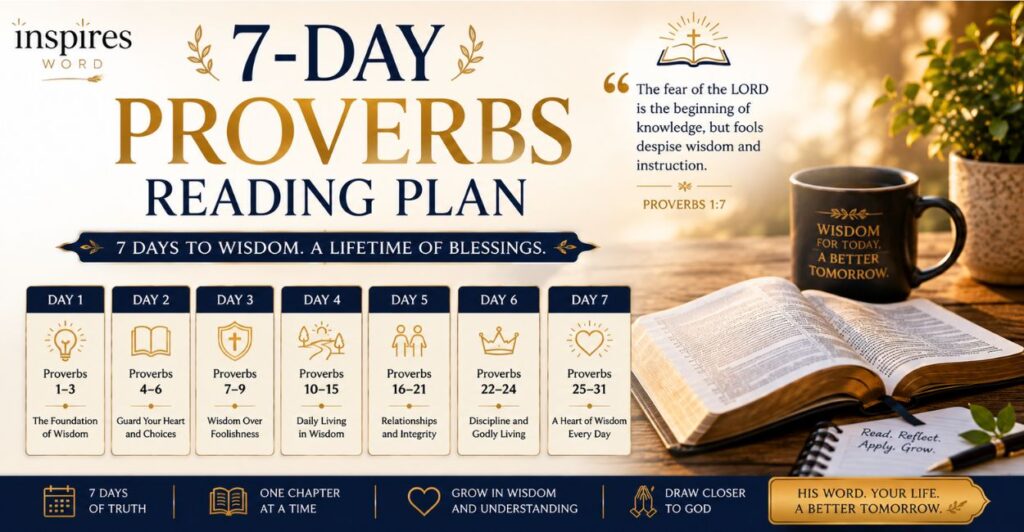
| Day | Proverbs Chapter | Focus Theme |
| Monday | Proverbs 1 | Beginning of wisdom |
| Tuesday | Proverbs 3 | Trusting God fully |
| Wednesday | Proverbs 10 | Words and speech |
| Thursday | Proverbs 15 | A gentle answer |
| Friday | Proverbs 16 | Plans and God’s will |
| Saturday | Proverbs 22 | A good name |
| Sunday | Proverbs 31 | A life of virtue |
31-Day Proverbs Challenge
Read one chapter of Proverbs matching the date each month.
- Day 1 to 5: Foundations of wisdom (Proverbs 1-5)
- Day 6 to 10: Discipline and diligence (Proverbs 6-10)
- Day 11 to 15: Speech and integrity (Proverbs 11-15)
- Day 16 to 20: God’s sovereignty in plans (Proverbs 16-20)
- Day 21 to 25: Relationships and character (Proverbs 21-25)
- Day 26 to 31: Wrapping up with the virtuous life (Proverbs 26-31)
Themes in Proverbs
| Theme | Example Verse |
| Wisdom and Understanding | Proverbs 4:7 |
| Diligence and Work Ethic | Proverbs 6:6-8 |
| Guarding Your Words | Proverbs 18:21 |
| Honoring Parents | Proverbs 1:8 |
| Managing Money Wisely | Proverbs 22:7 |
| Choosing Godly Friends | Proverbs 13:20 |
Wisdom vs Knowledge
| Aspect | Knowledge | Wisdom |
| Definition | Facts and information | Applying truth rightly |
| Source | Study and learning | Fear of the Lord, experience |
| Bible Reference | Proverbs 1:7 | Proverbs 9:10 |
| Result | Understanding what is true | Living out what is true |
Bible Study Tips Using Daily Proverbs
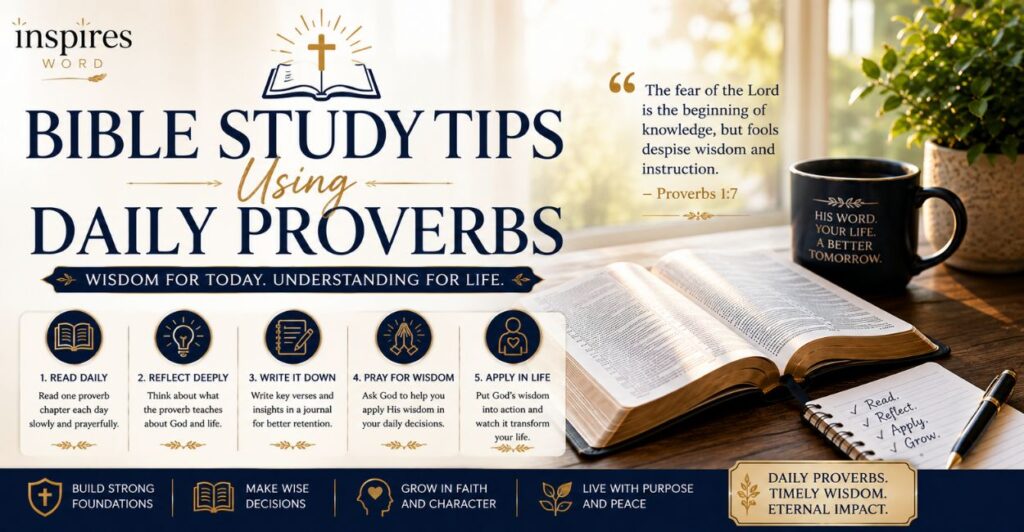
- Read one proverb slowly before starting your day.
- Write down the verse and one way to apply it today.
- Pair each proverb with a related Psalm for balance between wisdom and worship.
- Keep a small daily journal of insights and answered prayers.
- Discuss the day’s proverb with family or a small group for deeper understanding.
- Pray the proverb back to God as part of your morning prayer.
How to Apply Proverbs to Daily Life
Application Checklist
- Identify one decision today where you need wisdom.
- Ask what the day’s proverb teaches about that decision.
- Choose one practical action based on the verse.
- Pray before acting rather than after.
- Reflect at night on how the proverb showed up during the day.
Key Lessons From Proverbs
- Wisdom is available to anyone who seeks it sincerely.
- Words carry the power to build up or tear down.
- Discipline today prevents regret tomorrow.
- Godly friendships shape character over time.
- Humility opens the door to correction and growth.
Prayer of the Day
Heavenly Father, thank You for Your Word and the wisdom found in Proverbs. Help me apply what I read today, not just understand it. Guard my words, sharpen my decisions, and keep my heart humble before You. In Jesus’ name, Amen.
Practical Application
A believer struggling with impulsive spending might focus on Proverbs 21:20, which speaks about the wise storing up resources rather than spending everything they have. Applying this could mean setting a weekly budget and reviewing it against this verse each Sunday.
Frequently Asked Questions
1. What is today’s biblical proverb?
Today’s featured proverb is Proverbs 3:5-6, which teaches trusting God rather than relying only on personal understanding.
2. What is the proverb of the day in the Bible?
It refers to a daily selected verse from the Book of Proverbs used for devotional reading and reflection.
3. Why should Christians read Proverbs daily?
Because Proverbs was written specifically to build wisdom, discipline, and understanding for everyday decisions.
4. Who wrote the Book of Proverbs?
King Solomon wrote most of it, with additional sections from Agur and King Lemuel.
5. How many chapters are in Proverbs?
Proverbs has 31 chapters, matching the days in most months for daily reading plans.
6. What is the difference between Proverbs and Psalms?
Proverbs focuses on practical daily wisdom, while Psalms focuses on worship, prayer, and emotional expression toward God.
7. What is the most quoted proverb in the Bible?
Proverbs 3:5-6, about trusting the Lord with all your heart, is among the most quoted verses.
Conclusion
A daily biblical proverb is a small habit with a lasting effect. Pairing scripture with reflection and prayer turns a few minutes each morning into steady spiritual growth. Whether you follow the 7 day plan, the full 31 day challenge, or simply return to Proverbs 3:5-6 whenever you need direction, the goal stays the same: trusting God’s wisdom over your own

Sophia John is a passionate writer at inspiresword.com, where she creates meaningful quotes, proverbs, wishes, and inspirational messages for every occasion. My goal is to share uplifting and easy-to-read content that brings positivity to everyday life.